Showing posts with label alchemy. Show all posts

Saturday, March 27, 2021

Aion - The Original Satan


He Who Holds the Keys


Having carved variations of this leontocephaline figure, I thought it was time to explore this ancient deity further. Appearing as he does with a lion's head on a human body, girdled by a serpent, this imposing figure is found in ancient Mithraic temples throughout the Graeco-Roman world. His imagery is loaded with symbolism, but before we delve in we need figure out just who he is. 


This deity was known by many names: Aion, Sæculum, Kronos, but these were really just conventions, for he was truly nameless. For the purpose of this post, let's stick with Aion. 


Like the Zoroastrian, Zurvan, Aion isn't just a god of time, he is time; unyielding and absolute. He is the heavenly gatekeeper around whom fiery diadems glow. He stands at the outermost region of the cosmos, that of the aether, seen by ancients as a realm of fire. In fact, some of his statues were constructed so that flames could blast from the mouth. His fearsome jaws tear apart his progeny at the termination of each cosmic cycle. In ways his aspect is formidable, frightening, yet the lion’s head suggests courage and determination. 


As we can see, Aion is often depicted holding a set of keys. Those initiated in his ways  would have known him as a keeper of two gates -  two ways to escape the endless cycle of life, death and rebirth. His silver key would open the Gate of Cancer, beyond which was the path to the ancestors and reincarnation. While the golden key would unlock the Capricorn Gate, revealing the way to escape the cyclic grip of necessity, through gnosis-like transcendence. 


From Ostia Antica


Aion’s wings represent four-fold time, while the serpent that coils about him, like an ouroboros, is cyclical motion; that of the sun, the planets and of time. While his body is adorned with zodiacal symbols, reinforcing his dominion over time and the process of the ages. He is sometimes attended by chthonic beasts, such as Cerberus, or flailing knots of snakes, all connected with the underworld. Sometimes he is portrayed with an eye on his chest, this 'eye of the soul' was also a symbol of divine intellect. The eye of Aion was used in magic too, inscribed on talismans and objects to bring power. 


In the city of Alexandria, Aion was worshipped under a number of guises, usually in conjunction with other deities: Pschai-Aion, Sarapis-Aion, Aion-Kronos amongst them. This coupling of deities reflects the idea that gods were not seen only as supernatural personages, but as metaphysical concepts. 


Early Christianity, seeking to escape the rigours of endless time via the teachings of Jesus - Aion, the figurehead of boundless time, became ‘Satan’. Indeed many of the trappings of Satan are evident in his imagery: his association with a realm of fire, the serpent and underworld affiliations. 


I haven’t yet managed to lay my hands on a copy of Carl Jung’s work, Aion, which delves into Christianity’s beginnings and associated symbolism, as well as exploring various archetypes. The title perks my interest. But in the meantime, I’ll keep carving him from time-to-time, drawn by the powerful imagery from over two-thousand years ago. 


If you enjoyed this article you can Buy Me A Coffee here. Cheers. 


References:


The Mithras liturgy - Hans Dieter Betz


Magical Practice in the Latin West - Richard L. Gordon &  Francisco Marco Simón 


Mystery Religions in the Ancient World - Joscelyn Godwin


The Mysteries of Mithra - Franz Cumont


#aion

#mithras

#time


Thursday, November 24, 2016

John Dee's Monad


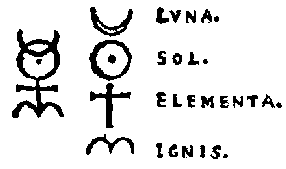
This is one of my favourite symbols. I’ve carved Dee's Monad a number of times over the past three years. I’ve noticed that there are variations of this symbol online but this is the original form. The Monad is a symbol of unification. Separate parts yield a whole. In the diagram you can see the individual elements and their basic significance. However there is more to this symbol and I thought I’d share my research in this post. 


In-keeping with the holistic imagery of this sigil we need to take a look at its creator, John Dee; an important figure in 17th c. English history, John Dee was born in England in 1527, and died late 1608. Through the course of his life he was a mathematician, an astrologer, astronomer and occultist. As a young man he went abroad to learn many of these arts. Returning from studies in Europe Dee was taken into the English aristocratic court, where he became an advisor to Elizabeth I. He advocated Imperial expansion of England and played a vital role in its inception. 

In the final decades of his life Dee dedicated himself to alchemical/hermetic philosophy, searching for an understanding of the divine forms he was certain underpinned reality. These transcendent principles he named “pure verities.” Dee saw no difference between his love of mathematics and science or his hermetic/occult dealings; to Dee they were means to the same end. In his quest for knowledge he gathered hundreds of books and manuscripts. It was said that Dee possessed the largest library in  England at the time. 

Dee is also renowned for his dealings with ‘angels’. It could be that these ventures into angelic converse were instigated because he felt a sense of failure in life. Dee hadn't  gained the knowledge and “pure verities” he sought via conventional methods. He was also losing favour with the Queen at court. So Dee took to scrying and ‘contacting’ divine beings. In 1582 Dee took one Edward Kelley into his service. Kelley has been figured by some scholars as a charlatan, however he was the medium  by which Dee conversed with angels. Together they meticulously detailed their dealings, completing several books  - some in the divine language which they called Enochian**. 

The following year, prompted by his angels, Dee left the court of Elizabeth I. Wishing to keep his head firmly on his shoulders* Dee and Kelley wound up travelling through Europe,  meeting with emperors and kings (all the while their spiritual conferences continued). Eventually Kelley and Dee parted ways after the angels told them that Kelley had to sleep with Dee's young wife. Kelley went to work for the emperor of the Bohemian empire, Rudolph II, in Prague, creating alchemical gold (did he or didn't he? Was Kelley a charlatan after all? A medium through whom Dee's subconscious was extricated in the form of angelic discourse?). Kelley, rising to fame across Europe because of his skills fell from grace. He was imprisoned and was slain whilst trying to escape. Dee returned to England and eventually died in poverty at his home, Mortlake,  at the grand old age of 82. 

One of the books he wrote during his long lifetime was the Monas Hieroglyphica, which is an explanation of the monad symbol. As previously seen Dee divided the monad into separate parts, and as we have also seen these parts can be divided into lunar, solar, element and fire, as well as lunar, solar, earth and spirit. However each part has other significance, as Dee sought to devise an all-embracing symbol - The monad. 

One thing to bear in mind here is that like the Pythagoreans Dee believed that numbers represented the sacred and the divine truth of the construction of the universe. Therefore sequences of numbers served as proof of the wholeness and sacredness of his hieroglyph. To Dee this symbol itself contained great power and mystery.


The Crown - 

The reason the moon features as taurus-like horns is that they are also cornucopia; the bounty of the fertile moon (remember that much cultivation was tied with astrological thought - and still is in modern day Italy). The moon  phases especially are seen as vital to the growth of plants. 

The Head - 

At the point (monad) all things come into being. In geometry neither a line nor a circle can be created without it. However due to the flawed pre-Galilean astronomy of the time the sun circled the earth. We know this to be wrong now, but Dee aligned the then belief with his symbol. Therefore the circle represented the sun's gyration around the central earth point. Entwined in the circle was of course the moon, also circling the earth. 


The Body - 

Represents the mystery of the elements, four stems that are also joined at their fulcrum. The cross also serves a quaternary function, upon which the theorem adds Pythagorean substance in the form of the Tetractys (a formula or sequence of numbers in triangular form that added up to the mystical number 10). Mathematically and numerically the cross was a symbol of perfection.

The Feet - 
As Aries Dee introduced a fire symbol, relating that in the alchemical practice of his symbol fire was a necessary component,


The entire figure could also be recognised by those versed in hermetic law as an alchemical process, complete in itself. Hermetically Dee summed his monad thus: The Sun and the Moon of this Monad desire that the Elements in which the tenth proportion will flower, shall be separated, and this is done by the application of Fire.


John Dee further involved the monad with astrological layers, proving that it was also formed from combinations of planetary symbols: Mercury, Venus, Mars, Jupiter, Saturn and elements of aries, sol and the moon. It was also a conjunction of Aries and Taurus. 

The Monas Hieroglyphicus is a dense and unfortunately obscure account of the symbol, however much one delves into numerological formulae, comparisons of the alchemic art and the symbol, along with geometric reasoning, interpretation et al. Other books of Dee's that explored the monad further have been lost. 

For those of you who wish to explore deeper I have provided a link by which you can access the Monas. 

Masters of Darkness - a BBC documentary about JD, featuring Alan Moore.


John Dee
 Footnote:

 *
Some believe that Dee was still working for Elizabeth and as he wandered Europe - he was in effect a spy.

**
Through their discourse Dee 'uncovered' a complete magical system with it's own language. He detailed everything in a scientific manner. 

Tuesday, July 26, 2016

Hands To The Sun - Solar symbols


The Life Giving Sun


We all like to sit in the sun. We like its warmth upon our skin. We appreciate how it is needed to ripen our fruit and our crops. We also know its danger, it can burn, ignite wildfires, cause drought and create deserts. To the ancients its nightly disappearance, and gradual loss of power during the course of a year as it yielded to winter, were sources of mythological tales. The sun is a life-giver, life sustainer, it embodies both strength and protection. To dance widdershins (clockwise in the direction of the sun) was deemed to bring fortune and luck.


Stone Mad Crafts
Helios,  4th c. BC, Ilion

For example, in Greek mythology Helios is the sun, himself the offspring of Titans (his father Hyperion - means the High One -  and his mother Theia - means wide shining light). His sisters are Eos (the dawn) and Selene (the moon). Helios was portrayed wearing a crown of sun rays and he drove the chariot of the sun across the sky everyday. His cult was most prolific in the Greek Island of Rhodes (The mighty Colossus was dedicated to his honour). 


Sun Symbol
Trundholm Sun chariot, dated to between 1800-1600 BC though dates are contested, others believe it to date between 1100-550 BC.

In Hellenic times, Apollo becomes associated with the sun, and the Romans named it Sol. However to the Bronze-Age Scandinavians Sòl was a female deity. Sometimes she was called Sunna and her brother was Maní, the moon. Her husband, Glenr, drove the horses of the sun across the sky - although in early myth the wagon or chariot was sometimes portrayed as a boat. Some say this 'sun-boat' myth points to an Egyptian origin, but that's not necessarily true.


The Celts and the Sun


stone mad crafts
Coligny Calendar

Surviving fragments of a Gallo-Romano calendar from Coligny, France, indicate that the moon was more relevant to the Celts (at least in terms of their time telling). The amazingly detailed calendar, itself based on earlier models, it pictured above. 

We know that ancient peoples aligned many of their sacred sites with the midwinter sun, and that many henges were astrologically aligned, pointing to a deep understanding of the celestial bodies, the constellations and movements of sun and moon. Surely some of this knowledge was inherited from the times of the megalith builders. 


Alan Sorrel
Stonehenge by Alan Sorrel

Pomponius Mela, a geographer of the 1st c. AD, wrote that the druids “claim to know the size and shape of the earth and universe, the motion of the stars and the sky and the will of the gods…”
Caesar mentions that Apollo was amongst the gods venerated by the Gauls. Apollo was associated with solar and healing properties (of course Caesar used a Roman name to describe a foreign deity). 

Deities associated with the sun can be traced in northern Italy, the eastern Alps and southern Gaul, where Bēlenos was honoured; the name said to come from root Gwel, to shine. Bēlenos' worship is reflected in names such as Belluno. In Britain and Gaul there's evidence of a god named Lug, Lugh or Lleu Llaw Gyffes which means 'the bright one with the strong arm' (he threw magical spears... sun rays?). The name of this Deity is evidenced in many place names from London to Lyon.

However many scholars, including Anne Ross and Ronald Hutton, are opposed to the idea that the Celts worshiped the sun as a god, or that there were sun cults as such. But I find it hard to believe that, given the obvious veneration of the solstices (and the respect given to the motions of the year) that the sun was never considered as a deity. Solar wheels and sun discs appear in many cultures, including those considered Celtic and Germanic. 


Solar Crosses from 1500 BC - pic by Radan Haenger.


Scandinavian Bronze-Age carvings - the solar boat


The Mythic Mechanics of the Sun Disc


Many myths make reference to a solar disc being drawn through the sky, while some describe how the solar deity was born across the heavens. It's possible that images of the solar wheel derive from this idea; the solar disc, combined with the wheels of a sun chariot (see the sun chariot above).*

The solar wheel was developed in the Carpathian region around 3000 B.C. and spread across Europe. It often appears on gold items, strengthening its solar association, for gold is the element of the sun. In Bronze-Age Scandinavian artwork it's drawn by horses, or borne in boats or chariots (tying in with the whole sun-boat imagery and ancient mythology regarding the rise and fall of the sun). There's even archaeological evidence that Iron Age Gauls offered solar wheel images at shrines, and also  cast them into sacred pools. As a symbolic gesture this is powerful, representing the sun’s departure into the ocean (the Underworld).


Viking
Scandinavian rock carving from the Bronze-age


Mithraic Sun Links 


Another sun god worshipped across the continent during the Roman invasion was that of Mithras, who enjoyed something of a cult following (though not an especially populous one - its adherents being drawn from a select cadre of Roman society, and by the military). In many ways Mithraism shared common ideas with Christianity: born of a virgin, an ultimate sacrifice, his followers addressed each other as ‘brother’, while temples were run by a ‘pater’ (father). Unlike Christianity Mithraism was tolerant of other faiths. 


Mithras born from the rock.


Mithras’ roots reach far back into antiquity; having his origins in the Middle-east, a Hellenised form of the deity was worshipped in Europe, with the spread of the Roman Empire. Like Bel and Apollo, he's more a god of light, than the sun itself. Temples to him were erected along Hadrian's Wall; like the one at Housesteads, dedicated to Sol - with whom Mithras was also associated. 

There's also some speculation whether Ogmios, a Celtic deity associated with the Ogham alphabet and also a solar god, was perhaps mingled with elements of this exotic deity. There is also speculation that the 6th Century bard, Taliesin, was knowledgable in the ‘mysteries’ of Mithraism. 


The Alchemical Sun


Robert Fludd
Alchemical sun by Robert Fludd 17th c. AD

In the middle-ages Alchemists viewed the sun as an active agent, as gold prepared for the work, and philosophical Sulphur. There was also Sol in homine, which was the invisible essence of celestial sun that nourished mankind's inner fires. From such aspersions, Jung, the master of symbolism and its interpretation, considered the sun as representing wholeness (especially when unified with the moon, like a king for a queen). 

There's something particularly enigmatic about some of these Alchemical and medieval images of the sun. To those versed in their layers of meaning surely the images evoked a sense of the deeper mysteries, and spiritual insights, Hermetic Alchemy professed. 


The Cycle of Hope


In doing the research for this piece, I’ve come to the conclusion that the sun was many things for the many different cultures, that have populated the earth throughout history. Never has there been a single unifying principle, though common themes exist between cultures. 

For example, the sun as life-giver, or protector, offering salvation seems to me a natural instinctive symbolism. Archaeological records show that burial mounds and stone circles of the megalithic period were involved in the veneration of both sun and moon. In generalising myth into principles, the sun could be seen to reflect the active principle, while the moon the passive. Equally, the sun could be said to encompass the hero and passion. In its yearly progression from the summer solstice, through the seasons toward mid-winter, it represents re-birth. A cycle of hope, which surely the ancient pastoral and pre-pastoral peoples clung to for the basic, pressing necessity of their survival. 

If you enjoyed this article you can Buy Me A Coffee here. Cheers. 


Sun horse from Balken - 

*curiously the sun-wheel image pre-dates the invention of the wheel - thus it may be that the sun wheel's spokes are in fact sun rays. 

Reference